
I often think about my time at UNEC between 2012 and 2018.
Students regularly protested over issues such as water scarcity. We marched, shouted and demanded action. Sometimes, the authorities shut the school for days.
Eventually, everyone returned.
The water problem often remained.
That cycle taught me something about Nigeria. We can mobilise passionately around a grievance without confronting the system that keeps reproducing it.
Today, I see a similar pattern in our national politics.
As Nigeria approaches the 2027 general elections, selective patriotism in Nigeria deserves a deeper conversation.
We often defend our country when our preferred candidate wins. Yet, when another group gains political advantage, we suddenly discover every weakness in the system.
That contradiction has shaped our politics for decades.
The politics of who benefits
Nigeria’s ethnic groups have produced different movements in response to perceived exclusion.
MASSOB and the Biafra movement emerged from the South-East. Yoruba nationalism has found expression through groups such as OPC and Yoruba Nation advocates.
The Niger Delta produced MEND and the Ijaw Youth Council. The Middle Belt Forum has also raised questions about representation and the interests of the region.
These movements do not share the same history or objectives.
However, they reflect a recurring feature of Nigerian politics.
When people feel excluded, identity becomes a powerful political language.
The problem begins when every group demands fairness only when it stands outside power.
That is selective patriotism in Nigeria.
Are Yorubas the biggest beneficiaries under Tinubu?
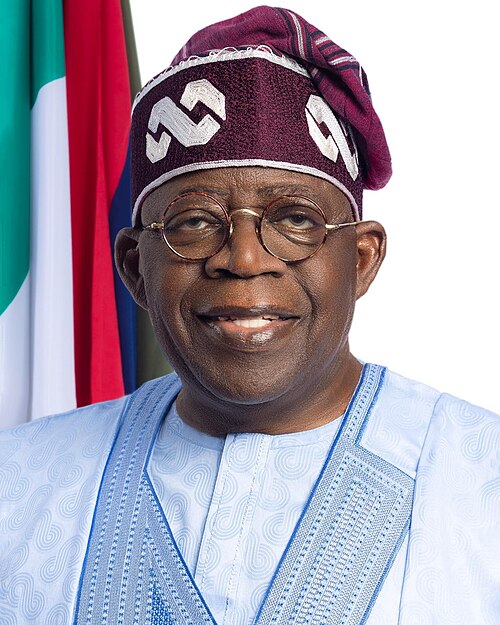
This question now appears frequently in political conversations.
Some commentators argue that President Bola Ahmed Tinubu’s administration has disproportionately benefited people of Yoruba origin.
The argument points to strategic appointments involving people from the South-West.
For example, critics have highlighted positions held by Yoruba appointees across finance, revenue, policing and other institutions.
In 2023, PDP chieftain Segun Sowunmi publicly questioned the pattern. He said, “it is beginning to seem that our people are going to get the best of the cherries.” He specifically mentioned Customs, Police, Army, CBN, IRS, taxation and appropriation.
Human rights lawyer Femi Falana also criticised the appointments of Ola Olukoyede and Bolaji Owasanoye to lead the EFCC and ICPC. Both men come from the South-West. Falana argued that the appointments did not reflect the federal character principle.
The Arewa Economic Forum went further in 2023. It accused the administration of what it called the “Yorubanisation” and “Lagoslisation” of appointments.
Such claims have therefore existed since the early months of the administration.
They have not disappeared.
But the numbers require a wider conversation
We should also resist turning a political claim into an established fact without examining the data.
The Federal Character Commission provides an important counterpoint.
In October 2025, its acting chairman said northern states accounted for 56.3 per cent of the federal leadership positions covered by the Commission’s analysis. The South accounted for 43.7 per cent.
The North-West held 157 positions, while the South-West held 132.
Among the 48 cabinet positions examined, the North-West and South-West each had 11 ministers.
That data does not erase concerns about individual appointments.
It does, however, complicate the claim that the Yoruba automatically dominate the federal government.
The FCC also explained that its figures excluded special advisers, senior special assistants, presidential aides, service chiefs and heads of security and law-enforcement agencies.
That limitation matters.
It means we should examine the composition of different categories of appointments separately rather than produce one sweeping conclusion.
The Commission’s current open-data portal also exists to track representation across political and federal positions.
The bigger question is not who benefits
For me, the bigger question goes beyond whether Yorubas have benefited more than other groups.
The real question is:
What kind of Nigeria do we want when our own people control power?
Would we demand federal character if our ethnic group dominated appointments?
Would we defend merit when our own people lose out?
Would we condemn nepotism when our relatives benefit from it?
Would we challenge corruption when someone from our community controls the institution involved?
These questions expose the weakness of selective patriotism in Nigeria.
Too often, we judge the same action differently depending on who benefits.
When our people receive an appointment, we call it representation.
When another group receives it, we may call it nepotism.
When our region gets a project, we call it development.
When another region gets one, we ask what they contributed.
That cannot build a united country.
We have seen this cycle before
Nigeria’s political history offers enough examples.
Different administrations have produced different perceptions of regional advantage.
President Muhammadu Buhari faced sustained criticism over perceptions of northern and particularly North-Western influence in government.
His supporters often defended the appointments through competence, experience or constitutional powers.
Critics saw a pattern of regional preference.
The same argument now surrounds Tinubu.
This is why I am cautious about declaring that one ethnic group is permanently favoured under any administration.
Political power changes hands.
So do the beneficiaries of access.
The deeper problem lies in a system where access to government can determine economic opportunity, influence and social mobility.
What happened to the ordinary Nigerian?
This is where my old UNEC experience comes back.
Students did not protest because they wanted to defeat another ethnic group.
They wanted water.
The ordinary Nigerian does not wake up every morning asking which ethnic group controls the CBN.
They want affordable food.
They want electricity.
They want functioning hospitals.
They want decent roads.
They want jobs and security.
They want their children to receive quality education.
That is why selective patriotism in Nigeria becomes dangerous.
It can make us defend political interests while ignoring the daily struggles that affect everyone.
A Yoruba trader and an Igbo trader can both struggle with inflation.
A Hausa farmer and an Ijaw fisherman can both worry about insecurity.
A civil servant in Oyo and a civil servant in Kano can both face poor working conditions.
The problems may differ in intensity, but hardship does not check ethnicity before arriving.
2027 should test our principles
INEC has fixed the presidential and National Assembly elections for 20 February 2027, with governorship and State Assembly elections scheduled for 6 March 2027.
That gives Nigerians an opportunity to ask better questions.
Not simply:
“Which tribe will benefit?”
But:
“What system will benefit Nigerians?”
We should examine candidates through their records, policies, competence, accountability and plans.
We should question appointments without turning every appointment into an ethnic conspiracy.
We should demand representation without abandoning merit.
We should also challenge corruption regardless of who commits it.
Most importantly, we must stop changing our principles whenever political power changes hands.
Patriotism cannot depend on who is winning
I do not believe the answer lies in pretending that ethnic politics does not exist.
It does.
Nigeria’s history makes that clear.
The answer lies in building institutions strong enough to make ethnicity less important to access, opportunity and justice.
Federal character exists for a reason.
So do constitutional safeguards, public-service rules and independent institutions.
We should strengthen them rather than weaponise them.
If a Yoruba person receives a public appointment because of competence, defend the appointment.
If another Yoruba person receives it because of political connection, question it.
Apply the same standard to an Igbo, Hausa, Ijaw, Fulani, Tiv or any other Nigerian.
That is the opposite of selective patriotism in Nigeria.
The Nigeria beyond ethnic victory
My time in China also influenced how I think about this.
Through my #ChinaInMyEyes reflections, I have repeatedly considered how nations move from identity-based competition towards development-focused institutions.
Nigeria cannot copy China’s political system.
We can, however, study how institutions shape development and how governments translate national objectives into practical outcomes.
Ultimately, development should not mean that one ethnic group defeats another.
It should mean that the Nigerian child in Ibadan, Kano, Enugu, Port Harcourt, Makurdi or Maiduguri has a fair chance to thrive.
The goal should not be to replace one privileged group with another.
The goal should be to build a country where privilege itself does not determine access to opportunity.
As 2027 approaches, perhaps our most important political test is not which ethnic group gets the most appointments.
It is whether we can finally apply the same standard to power, regardless of who holds it.
Because patriotism that appears only when our people benefit is not national unity.
It is selective patriotism in Nigeria.
And Nigeria needs something better.
My Boss Mr Idris, this is a piece that says the uncomfortable thing many won’t say. But permit me to bring it home to Oyo State, because the water you marched for at UNEC between 2012 and 2018 is the same water many communities in Ibadan are still waiting for today no even traces of pipe water in Ido local government and many young people don’t even know about tap water except drill water.
While the nation argues over which ethnic group eats the “cherries” in Abuja, the artisan in Ologuneru is closing shop by 6pm because there is no electricity to keep his generator running through the night except who have inverter and well established running with generator. The trader in Oritamerin is not asking whether the CBN governor is Yoruba, Igbo, or Hausa she is asking why the price of a bag of rice keeps climbing while her earnings stay the same.
while we watch the mouth of the tiger, let us also mind what is behind it. Our attention on who controls Customs, the Police, or the CBN in Abuja must not blind us to who controls the local government budget, the school renovation contract, or the primary health centre supplies right here in Ido and across Oyo State.
You are right that patriotism cannot depend on who is winning. I would only add: accountability cannot depend on how far away the office is either. It is easier to condemn “Yorubanisation” in Abuja than to ask hard questions about appointments and contracts within our own state government yet both tests measure the same thing: whether we apply one standard to power, or two.
2027 will indeed test our principles nationally. But 2027 also brings governorship and State Assembly elections here at home on 6 March. That is where the test begins for us in Oyo not with which tribe sits where in the federal cabinet, but with whether we ask our own state officials the same questions we are asking Tinubu’s appointees.
Development, as you rightly say, should mean the Nigerian child in Oyo/ Ibadan has a fair chance to thrive. That fair chance is decided less in Abuja than in Agodi.
Akere Okikiola Babatunde Omo Bamgbegbin Beyioku Akere, Oritamerin Ibadan
𝗜𝘁’𝘀 𝘀𝗮𝗱 𝗵𝗼𝘄 𝘄𝗲 𝗷𝘂𝘀𝘁 𝗺𝗮𝗻𝗮𝗴𝗲𝗱 𝘁𝗼 𝗴𝗲𝘁 𝗵𝗲𝗿𝗲
This is a good read, I honestly think that the best system for a functional Nigeria will be a competitive Regional Government.
This structure gives identity to the people and makes accountability ethnic and local while still keeping the country as one.
Well-said