politics

Selective Patriotism in Nigeria: Who Really Benefits From Power?

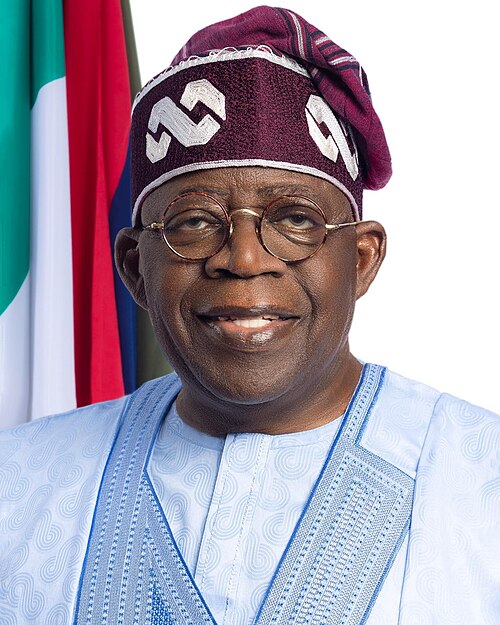
I often think about my time at UNEC between 2012 and 2018. Students regularly protested over issues such as water scarcity. We marched, shouted and demanded action. Sometimes, the authorities shut the school for days. Eventually, everyone returned. The water problem often remained. That cycle taught me something about Nigeria. We can mobilise passionately around a grievance without confronting the system that keeps reproducing it. Today, I see a similar pattern in our national politics. As Nigeria approaches the 2027 general elections, selective patriotism in Nigeria deserves a deeper conversation. We often defend our country when our preferred candidate wins. Yet, when another group gains political advantage, we suddenly discover every weakness in the system. That contradiction has shaped our politics for decades. The politics of who benefits Nigeria’s ethnic groups have produced different movements in response to perceived exclusion. MASSOB and the Biafra movement emerged from the South-East. Yoruba nationalism has found expression through groups such as OPC and Yoruba Nation advocates. The Niger Delta produced MEND and the Ijaw Youth Council. The Middle Belt Forum has also raised questions about representation and the interests of the region. These movements do not share the same history or objectives. However, they reflect a recurring feature of Nigerian politics. When people feel excluded, identity becomes a powerful political language. The problem begins when every group demands fairness only when it stands outside power. That is selective patriotism in Nigeria. Are Yorubas the biggest beneficiaries under Tinubu? This question now appears frequently in political conversations. Some commentators argue that President Bola Ahmed Tinubu’s administration has disproportionately benefited people of Yoruba origin. The argument points to strategic appointments involving people from the South-West. For example, critics have highlighted positions held by Yoruba appointees across finance, revenue, policing and other institutions. In 2023, PDP chieftain Segun Sowunmi publicly questioned the pattern. He said, “it is beginning to seem that our people are going to get the best of the cherries.” He specifically mentioned Customs, Police, Army, CBN, IRS, taxation and appropriation. Human rights lawyer Femi Falana also criticised the appointments of Ola Olukoyede and Bolaji Owasanoye to lead the EFCC and ICPC. Both men come from the South-West. Falana argued that the appointments did not reflect the federal character principle. The Arewa Economic Forum went further in 2023. It accused the administration of what it called the “Yorubanisation” and “Lagoslisation” of appointments. Such claims have therefore existed since the early months of the administration. They have not disappeared. But the numbers require a wider conversation We should also resist turning a political claim into an established fact without examining the data. The Federal Character Commission provides an important counterpoint. In October 2025, its acting chairman said northern states accounted for 56.3 per cent of the federal leadership positions covered by the Commission’s analysis. The South accounted for 43.7 per cent. The North-West held 157 positions, while the South-West held 132. Among the 48 cabinet positions examined, the North-West and South-West each had 11 ministers. That data does not erase concerns about individual appointments. It does, however, complicate the claim that the Yoruba automatically dominate the federal government. The FCC also explained that its figures excluded special advisers, senior special assistants, presidential aides, service chiefs and heads of security and law-enforcement agencies. That limitation matters. It means we should examine the composition of different categories of appointments separately rather than produce one sweeping conclusion. The Commission’s current open-data portal also exists to track representation across political and federal positions. The bigger question is not who benefits For me, the bigger question goes beyond whether Yorubas have benefited more than other groups. The real question is: What kind of Nigeria do we want when our own people control power? Would we demand federal character if our ethnic group dominated appointments? Would we defend merit when our own people lose out? Would we condemn nepotism when our relatives benefit from it? Would we challenge corruption when someone from our community controls the institution involved? These questions expose the weakness of selective patriotism in Nigeria. Too often, we judge the same action differently depending on who benefits. When our people receive an appointment, we call it representation. When another group receives it, we may call it nepotism. When our region gets a project, we call it development. When another region gets one, we ask what they contributed. That cannot build a united country. We have seen this cycle before Nigeria’s political history offers enough examples. Different administrations have produced different perceptions of regional advantage. President Muhammadu Buhari faced sustained criticism over perceptions of northern and particularly North-Western influence in government. His supporters often defended the appointments through competence, experience or constitutional powers. Critics saw a pattern of regional preference. The same argument now surrounds Tinubu. This is why I am cautious about declaring that one ethnic group is permanently favoured under any administration. Political power changes hands. So do the beneficiaries of access. The deeper problem lies in a system where access to government can determine economic opportunity, influence and social mobility. What happened to the ordinary Nigerian? This is where my old UNEC experience comes back. Students did not protest because they wanted to defeat another ethnic group. They wanted water. The ordinary Nigerian does not wake up every morning asking which ethnic group controls the CBN. They want affordable food. They want electricity. They want functioning hospitals. They want decent roads. They want jobs and security. They want their children to receive quality education. That is why selective patriotism in Nigeria becomes dangerous. It can make us defend political interests while ignoring the daily struggles that affect everyone. A Yoruba trader and an Igbo trader can both struggle with inflation. A Hausa farmer and an Ijaw fisherman can both worry about insecurity. A civil servant in Oyo and a civil servant in Kano can both face poor working conditions. The problems may differ in intensity, but hardship does not check ethnicity before arriving. 2027 should

Selective Patriotism in Nigeria: Who Really Benefits From Power? Read More »
China in my Eyes: Workplace Fear and Silence, Why Nigerians Stop Complaining at Work.

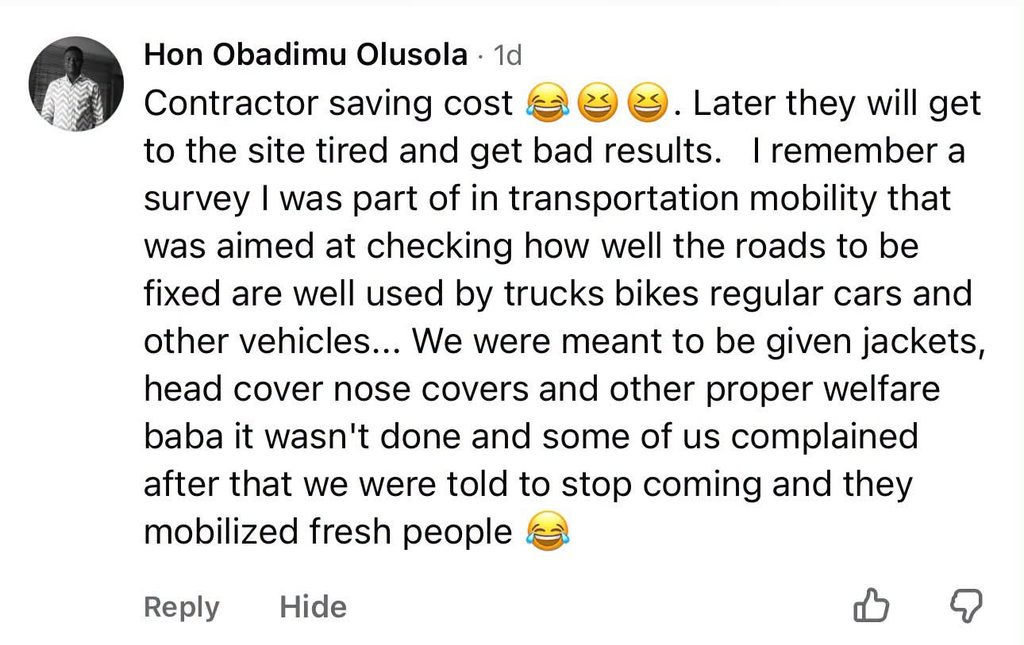
One of the most troubling things in any workplace happens when people stop complaining and it is now being classified and largely regarded as workplace fear and silence. I recently came across a comment on Facebook that captured workplace fear and silence problem painfully. One of my followers named Hon. Obadimu Olusola described a transportation-mobility survey they joined. The team expected basic welfare items for participants. These included jackets, head covers, nose covers and other protective equipment. According to the account, the organisers did not provide those items. Some participants complained about the situation. The response reportedly asked them to stop coming. The organisers then brought in fresh participants. That story may look like one workplace experience. However, it points to a much deeper problem within our society. When Silence Becomes a Survival Strategy Many people have learnt to remain silent because speaking up can come with a price to pay and created a workplace fear and silence pattern. A worker who questions poor treatment may attract an unwanted label. A civil servant who challenges an instruction may appear disloyal. Contractors may fear losing future opportunities. Employees who report wrongdoing can also worry about their positions. Over time, survival can become more important than speaking the truth. That creates a dangerous culture. People who should ask questions begin to protect their jobs. Those who should report wrongdoing begin to look away. Others simply say, “Abeg, make I no get problem.” Eventually, silence becomes part of the system. The problem goes beyond individual workplaces. It affects how institutions operate and how people relate to authority. When People Become Afraid of Authority A workplace should allow people to raise legitimate concerns without fear. Unfortunately, some environments operate differently. The person with authority may hold enormous power over those below them. That power can influence employment, contracts, promotions and access to opportunities. The message can become painfully simple: “If you don’t like it, others are waiting to take your place.” Such an environment discourages honest feedback. It also removes an important layer of accountability. People stop telling leaders when something goes wrong. That silence can allow small problems to grow into institutional failures. Workplace welfare therefore deserves more than administrative attention. It concerns dignity, safety, rights and the quality of our institutions. What #ChinaInMyEyes Made Me Consider My visits to China have made me think more deeply about these issues around workplace fear and silence. Through my #ChinaInMyEyes compilations, I have tried to examine development beyond roads, buildings and impressive infrastructure. The experience exposed me to conversations around discipline, public responsibility, poverty reduction and local development. China has its own history, institutions and political context. Nigeria cannot simply copy another country’s system. Still, every development experience offers lessons worth examining. One lesson particularly interests me: public office should come with responsibility and personal discipline. In Up and Out of Poverty, Xi Jinping discusses the importance of self-cultivation among public officials. He describes being “clean” as acting with integrity and having nothing to hide. He associates being “prudent” with careful consideration in words and actions. He also connects diligence with studying hard and doing one’s best to advance. The principle matters beyond the person who expressed it. Public office should demand integrity, responsibility and restraint. It should never become a pathway to personal enrichment, intimidation or the creation of powerful cliques. We Need Systems That Protect People Nigeria needs stronger mechanisms for protecting people who raise legitimate concerns. Such mechanisms should cover workplace welfare, safety, corruption, abuse and violations of established rights. Government should consider strengthening existing agencies or creating effective independent structures where genuine gaps exist. These institutions should do more than receive complaints. They should investigate credible reports. They should protect whistleblowers where appropriate. They should enforce relevant standards. Where officers or organisations violate established rules, appropriate sanctions should follow due process. The question becomes important when the person receiving your complaint controls your employment. What happens then? Many people simply keep quiet. When everyone keeps quiet, wrongdoing can become normal. Public Service Must Remain Public There is another side to this conversation. Public servants should not see public office primarily as an opportunity for personal gain. Neither should political connections determine who gets protection from accountability. Institutions struggle when individuals form cliques around selfish interests. The situation becomes worse when those networks use public positions to advance private agendas. Public service should remain centred on the public. An office holder occupies a position temporarily. The institution should outlive the individual. That understanding should influence every decision. It should shape how officials treat workers. It should guide how they manage public resources. It should determine how they respond to criticism. Most importantly, it should protect the right of people to disagree responsibly. Development Is Also About How We Treat People We often measure development through kilometres of roads, megawatts of electricity and completed projects. Those indicators matter. Yet development also concerns the everyday experience of people within our institutions. What happens when someone says, “This isn’t right?” Can that person speak without fear? Can a worker request protective equipment without risking their livelihood? Can a civil servant question an irregular instruction without becoming a target? Can an employee report misconduct without facing retaliation? Can public officers disagree professionally without creating camps? These questions also belong in our development conversation. A society where people fear speaking up may appear peaceful. Sometimes, however, that silence simply reflects fear. Silence should never become our definition of good governance. The Culture We Need to Build My #ChinaInMyEyes journey continues to remind me that development involves more than what we build. It also concerns the systems behind those achievements. It concerns the values that guide institutions. It concerns how leaders exercise authority. Most importantly, it concerns how institutions treat ordinary people. Nigeria has talented people. We have capable professionals and public servants who genuinely want to serve. What we need is an institutional culture that gives them room to do the right thing. We should create

China in my Eyes: Workplace Fear and Silence, Why Nigerians Stop Complaining at Work. Read More »

“Balancing Progress and Preservation: Oyo State’s Battle Against Illegal Structures and the Path to Sustainable Urban Development” by Idris Animasaun

The growing presence of shanties, makeshift stalls, kiosks and other unauthorised structures around the Ojoo Bus Terminal in Ibadan became a subject of public concern in 2024, following an enforcement notice issued by the Oyo State Government directing squatters, stall owners and operators of kiosks around the area to relocate as they posed a big threat to urban development of the city. The government’s decision generated concerns among some of those affected, with representations reportedly made to the Chairman of Agidigbo FM, Alhaji Oriyomi Hamzat, seeking intervention and an appeal to the state authorities for a review of the enforcement process. The situation subsequently provided an opportunity for stakeholders to inspect the affected areas and examine the broader implications of unregulated development around one of Ibadan’s important gateways. During the inspection, which I undertook alongside Hon. Mojeed Mogbonjubola Jagaban and Alhaji Oriyomi Hamzat, attention was drawn not only to the structures themselves but also to their relationship with the surrounding environment, particularly drainage channels and waste management. For a city experiencing rapid expansion, the issue goes far beyond the removal of a few kiosks or shanties. The urban development question Ojoo occupies an important position within Ibadan’s urban geography. As one of the major entry points into the city, it serves as a transportation hub, commercial centre and gateway through which residents and visitors encounter Ibadan. What happens around such locations therefore contributes significantly to the perception of the city. When unplanned structures are allowed to progressively occupy road setbacks, drainage corridors, pedestrian spaces and other areas reserved for public infrastructure, the immediate consequence may appear to be limited to visual disorder. Over time, however, the consequences become much broader: obstruction of drainage, increased exposure to flooding, congestion, poor waste disposal, difficulty in infrastructure maintenance and deterioration of the general quality of the urban environment. This is why the conversation about illegal structures should not be reduced to government versus traders or enforcement versus livelihood. It is fundamentally a conversation about what kind of city we are deliberately building. Enforcement is part of urban governance Government enforcement of planning and environmental regulations should be taken seriously, particularly in a rapidly urbanising environment. Rules governing land use, setbacks, drainage corridors, road reservations and public spaces exist for reasons that often become apparent only when infrastructure fails. A drainage channel occupied by a kiosk may appear harmless on an ordinary day, but its obstruction can become a serious public-safety issue during intense rainfall. For this reason, enforcement should not be viewed simply as an exercise in removing people from their means of livelihood. It should be understood as part of the government’s responsibility to protect public infrastructure and preserve the long-term functionality of the city. However, effective enforcement must also be predictable, humane and transparent. Where informal economic activities have existed for years, government has a responsibility to communicate clearly, provide reasonable alternatives where possible and engage affected communities before enforcement. The objective should be to restore order without unnecessarily creating hardship. Climate resilience makes the issue even more urgent The concerns raised around Ojoo in 2024 remain relevant today because urban development is increasingly being shaped by climate realities. As rainfall patterns become more intense and urban surfaces become increasingly covered by buildings, concrete and other impermeable materials, drainage infrastructure becomes even more important. Every blocked channel, occupied setback and improperly disposed pile of waste can contribute to the disruption of stormwater movement. The explanation reportedly given by the then Commissioner for Environment during the engagement was therefore significant. The government communicated that the intervention was intended, among other things, to protect residents and businesses from the consequences of blocked drainage pathways during heavy rainfall. The state also indicated that provisions had been made to accommodate some commercial activities, including designated areas around the neighbourhood market. This approach is important because sustainable urban management should not simply ask, “How do we remove these structures?” It should also ask, “Where should these activities appropriately take place?” From enforcement to prevention One of the biggest lessons from the Ojoo experience is that enforcement should ideally happen before informal development becomes entrenched. A vacant setback today can become a row of shops tomorrow. A temporary kiosk can eventually become a permanent structure. A small accumulation of waste can develop into an environmental problem. By the time government intervenes, livelihoods may already depend on the location, making enforcement more difficult and socially sensitive. This means that urban governance must move from reactive enforcement to continuous monitoring and preventive planning. Planning authorities, environmental agencies, local governments, transport managers and communities must work together to identify vulnerable areas before illegal development becomes widespread. There is also a role for citizens. Supporting government does not mean blindly endorsing every enforcement action; neither does questioning government policy mean defending illegal development. The more constructive position is to demand enforcement that is lawful, consistent, humane and properly planned. The need for a balanced approach The empathy expressed by Alhaji Oriyomi Hamzat towards those who could be affected by the enforcement was important. People who depend on informal businesses for their livelihoods cannot simply be treated as obstacles to urban development. At the same time, compassion should not mean abandoning urban planning regulations. A compassionate government can enforce its laws while providing alternatives. A responsible citizen can defend their livelihood while respecting regulations designed to protect the wider community. The real objective should therefore be to create a balance between economic activity and urban order. Ojoo should not merely be seen as a place where illegal structures were removed. It should be viewed as a case study in how Ibadan can manage growth, protect infrastructure and improve the quality of its urban gateways. Looking beyond Ojoo The lesson from Ojoo extends to other rapidly developing parts of Ibadan and Oyo State. As the metropolitan area expands, more peri-urban communities will transition from peripheral settlements into major commercial and residential centres. If this growth is not properly managed, today’s temporary structures

“Balancing Progress and Preservation: Oyo State’s Battle Against Illegal Structures and the Path to Sustainable Urban Development” by Idris Animasaun Read More »

Policing the Future: “Sustainable and Inclusive Designs for Safer Communities”

A few months ago, I came across an encouraging update: the honorable member representing my constituency has commenced the construction of a new police post. This development is not only commendable, but it also affirms the findings from my 2022 urban renewal proposal for the Kudeti area. Growing up in this neighborhood, we witnessed repeated waves of insecurity, especially attacks linked to the notorious “One Million Boys” and other gangs. It wasn’t until the death of Biola Ebila in July 2020, during a violent confrontation with a rival group, that relative calm returned to the area. But the scars of insecurity remain. When I began my urban renewal project, data revealed a striking reality: the stretch from Molete through Yejide, Community Grammar School, Ilupeju, Kudeti, with spurs reaching Agbongbon, Idi-Arere, and down to Bode, is home to over 1,000 families. Yet, these neighborhoods are currently expected to rely solely on the Idi-Aro and Sanyo police divisions for security coverage. The construction of this new police post is, therefore, not just timely, it is a critical enhancement to the area’s security architecture. However, this move also brings to the fore previous failed attempts. For instance, the Adeyemo/Osungbade community once initiated a police post project that remains incomplete despite interventions, including cash donations by Hon. Dapo Lam Adesina. But beyond the need to increase the number of police posts under existing divisions, there’s a pressing call to rethink their design and functionality. It’s time we moved away from the intimidating, closed-off structures of the past and toward user-friendly facilities that foster positive relationships between officers and the communities they serve. Although the design of the newly proposed police post has yet to be made public, I strongly hope it considers key improvements. There must be provisions for shaded, covered waiting areas for civilians, which are often neglected. This lack of comfort not only discourages public engagement but can also become grounds for harassment. Moreover, overreliance on artificial ventilation and lighting compromises sustainability. My design proposals in 2022 focused on addressing these very issues by incorporating passive design strategies that enhance comfort while minimizing energy use. While every design can evolve, we must start ensuring that these public facilities are not only functional but also sustainable and community-friendly, from their form and façade to the spaces within. Idris Animasaun Architect and Social Change Advocate

Policing the Future: “Sustainable and Inclusive Designs for Safer Communities” Read More »

“Breaking the Barrier: The HND/BSc Dichotomy and Its Impact on Human Capital Development in Nigeria”

The HND/BSc dichotomy has long been a source of frustration and inequality in Nigeria’s education and employment sectors. While both qualifications require rigorous academic work and practical training, HND holders face systemic discrimination, particularly in government jobs and private sector placements. Many companies limit HND graduates to lower career levels, restricting their chances of promotion and professional growth. This bias not only stifles individual potential but also hinders national human capital development, as thousands of skilled and capable professionals are sidelined due to an outdated classification system. In a world where technical and vocational expertise should be valued alongside traditional academic degrees, Nigeria continues to reinforce a class divide between polytechnic and university graduates, to the detriment of its workforce. Beyond the employment barrier, the HND route is a significant waste of time for many students who choose it, often out of financial constraints or admission difficulties in universities. While a BSc degree typically takes four to five years to complete, HND graduates spend two years in ND, another two in HND, plus an extra year of mandatory industrial training (IT), totaling five years, yet they still face limitations. Many are forced to undergo additional “conversion” programs to obtain a BSc equivalent before they can fully compete for jobs, resulting in prolonged academic years with no guaranteed career advantage. This inefficiency discourages technical education, leaving polytechnics struggling with declining enrollment as students opt for university programs to avoid discrimination. For some fields, the HND qualification is practically terminal, making professional certification nearly impossible without additional academic upgrades. A glaring example is Architecture, where HND holders cannot obtain full professional licensing until they complete a university “conversion” to BSc Architecture before proceeding to an MSc or the necessary professional exams. This puts HND graduates in a disadvantaged loop, forcing them to either spend extra years bridging the gap or abandon their career ambitions altogether. Such structural barriers devalue polytechnic education and create unnecessary obstacles for skilled individuals, limiting their contributions to national development. The refusal to eliminate this outdated dichotomy not only wastes time, talent, and resources but also slows Nigeria’s progress in key industries that rely on technical expertise. The 2021 Bill, which aimed to abolish this discrimination, was a beacon of hope, yet it remains unsigned, leaving thousands of graduates in limbo. Instead of directing anger at institutions like Taraba State University, who recently published employment opportunities exuded these previously highlighted biases, efforts should be channeled towards pressuring the National Assembly and the Presidency to revive the bill. HND holders, student bodies, and advocacy groups must intensify their push for reform, ensuring that every qualification is given the respect it deserves. Only then can Nigeria build a truly inclusive, fair, and productive workforce that maximizes the potential of all its graduates. Idris AnimasaunArchitect and Social Change Advocate

“Breaking the Barrier: The HND/BSc Dichotomy and Its Impact on Human Capital Development in Nigeria” Read More »

Mukaila Auxiliary: Reflections on Power, Struggles, and Fate

One thing I can tell you for certain, many atrocities will be committed in the name of road union leadership. But beyond the chaos, behind the hardened voices and the fearsome reputations, lies a calculated effort to instill fear, an unspoken strategy to maintain power. Yet, beneath the surface, behind the actions, sometimes theirs, but often their followers’, there exists a father, a husband, a man with emotions hidden beneath the weight of his title. These were the moments I witnessed in the eyes of Mukaila Auxiliary when I met him a few days ago at Agodi Correctional Centre. The man before me was reflective, deeply aware of how all power ultimately belongs to Allah. He spoke with conviction, if he had been here before and found freedom, he was confident that mercy would find him once again. But what struck me the most was his unwavering respect for the very system that has kept him captive. Behind his humbled face, I could still see the echoes of battles fought, the weight of a struggle that never truly ended. And for a moment, I found myself reminiscing, about the times I tried to reach out, not just to him, but to the very structure he represented. I grew up in the heat and heart of it all in the early 2000s. • I’ve met Alhaji Akewusola Tokyo. • I walked freely into Alhaji Tawa’s house almost every week. • I was raised in Molete—the HQ of Oyo Politics. I reminded him of how we first met at Oga’s house just days before the election. I was starstruck, yet I felt an overwhelming sense of pity. Deep down, I had a feeling it wouldn’t end well. If only they were smart enough… just if only. Power, Betrayal, and the Cycles of Fate Power is a revolving door, but loyalty is often left outside. The very people who struggle alongside you, who chant your name in the streets, are sometimes the first to disappear when the tide turns. Those who once swore allegiance become the architects of your downfall. The same system that rewards also punishes, and in the end, everyone is just another character in a script already written by fate. Auxiliary’s story is not unique—it is a script that has played out in history over and over again. The difference is only in the names, the faces, and the timeline. Idris AnimasaunArchitect and Social Change Advocate

Mukaila Auxiliary: Reflections on Power, Struggles, and Fate Read More »

Enhancing Communication and Accountability in Oyo State Ministries: A note to Michael Ogunsina

Many agencies and ministries in Oyo State employ young aides to support political appointees, yet it remains difficult to reach these bodies via official emails. This gap forces individuals to resort to the unsustainable practice of delivering documents in person. It is perplexing to hear frequent excuses about the government’s inability to adequately empower some appointees. However, setting up an official email address is a basic administrative task that does not require high-level intervention. It is unreasonable to expect His Excellency to address such fundamental needs. Every government agency should establish a comprehensive feedback mechanism beyond the existing Oyo State Government Feedback system. I have observed numerous local government chairmen appointing aides to empower friends and supporters, yet these aides often fail to contribute meaningfully. Instead, they focus on disseminating trivial news, lacking any substantial engagement. Effective communication tools such as newsletters, webinars, apps, and forums like Nairaland should be utilized. When implementing these tools, ensure they are transferable and not dependent on individual officeholders. For example, some official Instagram accounts ceased functioning once the officeholders left, demonstrating a lack of continuity. As young professionals, we must strive to make lasting, intentional impacts regardless of our positions. It is essential to transcend the practice of merely sharing broadcast messages and copied posts across WhatsApp. Genuine relevance comes from making significant contributions that showcase intelligence and value to the realization of policies and projects. Instead of waiting to attack dissenting voices, demonstrate your capabilities through constructive actions. Ogunsina Oluwaseun Michael, I am disappointed by the current performances of some youths of the party working as aides in some departments and agencies because of their lack and of implementing an effective publicity and communication channels. That of Ministry of Agriculture’s significant work is concerning to mention at least, you can barely reach quite a number of these offices via any official channel. The public needs to be aware of the ministry’s activities and achievements but also an Avenue for which they can equally be officially reached. I require the official email addresses for the Ministries of Youth and Sports, Agriculture, Environment, Works, and Lands and Housing by the close of business tomorrow. Idris Animasaun Architect and Social Change Advocate

Enhancing Communication and Accountability in Oyo State Ministries: A note to Michael Ogunsina Read More »

Effective Waste Management: Idris Animasaun score Temitope Glorious high on Municipal Waste Management

Kolapo Temitope Glorious has initiated a competition to win the Best LG (Local Government) of the Year award. His recent efforts in evacuating a significant volume of waste from the Olorunsogo bridge a few weeks ago clearly demonstrate the necessity of decentralizing waste management in the state. This initiative is part of a broader strategy by the state government to enhance waste collection services. By breaking the previous monopoly held by Mottainai Recy and incorporating additional relevant contractors, there have already been notable improvements in waste management. However, it is crucial to explore more sustainable solutions beyond these initial steps. Decentralizing waste management allows for tailored approaches that consider the unique needs of different communities. Localized strategies can be more responsive and efficient, addressing waste issues at their source rather than relying solely on centralized systems. This approach not only improves the effectiveness of waste collection but also fosters community involvement and accountability. Furthermore, our current systems and neighborhood planning underscore the challenges of motorizing waste management. The infrastructure in many areas is not conducive to large-scale waste collection vehicles, which often struggle with accessibility and maneuverability in densely populated or poorly planned neighborhoods. By adopting decentralized methods, we can implement more flexible and adaptive solutions, such as smaller, more agile vehicles or community-based collection points, which can significantly enhance efficiency. Additionally, promoting waste reduction and recycling at the local level is essential. Educational campaigns and community initiatives can encourage residents to minimize waste generation and participate in recycling programs. This not only reduces the burden on waste collection systems but also contributes to environmental sustainability. In conclusion, while the state’s efforts to improve waste collection through diversified contracting are commendable, it is imperative to pursue further sustainable solutions. Decentralizing waste management, improving neighborhood planning, and fostering community involvement are key strategies that can address the underlying challenges and pave the way for a cleaner, more efficient waste management system. Idris Animasaun  Architect and Social Change Advocate  Writes from Molete, Ibadan.

Effective Waste Management: Idris Animasaun score Temitope Glorious high on Municipal Waste Management Read More »

DEMOCRACY DAY 2024: Idris Animasaun pens Open Letter to the Governor Advocating for Balanced Governance and Youth Empowerment in Oyo State.

I believed it had been a positive experience engaging with our friends and associates in government, leveraging those relationships to offer our insights and advice where needed. Your leadership and dedication to the youth constituency are evident in your decision to entrust the future of the state to over 50 young individuals serving as commissioners, SSAs, SAs, EAs, Council Chairmen, or Vice Chairmen. However, under your administration, the state is almost becoming a one-party state. We have heard faint voices warning some individuals not to publicly associate with us, labeling us as opposition or a threat to their political careers. While it is understandable that some may submit to such autocratic pressures, we will not subject ourselves to enmity and dissociation. Instead, we continue to offer our support and collaboration in the ongoing effort to reposition the state and restore its former glory. Despite these challenges, this administration is the closest I have ever been to any government. Yet, I have never exploited this relationship for personal gain. I have no proposals seeking approval, no projects requiring endorsements, and I have never lobbied for any position, despite having ample connections to explore such opportunities. This commitment has enabled us to champion causes that have yielded positive results. We have seen responses to our calls, such as the relocation of the amusement park to Ilu-Tuntun, the upgrade of Agodi Gardens, the remodeling of the Government House, improvements in environmental management, and numerous emergency responses to road and drainage issues. Our actions have always been about asking relevant questions, not making libelous or malicious statements. I have never engaged in confrontational dialogue on any radio program with His Excellency. However, it is imperative that we do not all simply sing praises. I supported and voted for Seyi Makinde, but it would be a disservice to my conscience to remain silent in the face of oppressive and capitalist policies. All I seek are answers to the many questions posed by concerned citizens. My name has been mentioned numerous times due to the questions I continue to ask, not because I stand against or denigrate the achievements of your administration. Some of my articles you have read and responded to publicly, but I hope and pray that you continue to be properly briefed on our intentions and statements. The news and rumors circulating close to your office are becoming a major source of concern. Therefore, I advocate for continuous engagement rather than silencing dissenting voices, which are often misconstrued as opposition. On this Democracy Day, I pray you continue to receive guidance from God as you uphold the rule of law as outlined in your Omituntun road-map to sustainable development and the constitution of the Federal Republic of Nigeria. Idris AnimasaunArchitect and Social Change Advocate

DEMOCRACY DAY 2024: Idris Animasaun pens Open Letter to the Governor Advocating for Balanced Governance and Youth Empowerment in Oyo State. Read More »

Dear Young Folks (Series 5) “Tomorrow’s Leaders: Balancing Present Gratification with Future Consequences”

Dear Young Folks, The emerging leaders of tomorrow wield both the promise of progress and the peril of shortsightedness, as they grapple with the temptation to prioritize immediate rewards over long-term sustainability. This delicate balance between present indulgence and future responsibility echoes throughout your actions and inactions, revealing a concerning resemblance to the traits of certain political figures. In the pursuit of effecting meaningful social change, I remain steadfast in my commitment to upholding honor as the cornerstone of ethical conduct. Guided by the understanding that integrity is the hallmark of superior individuals, I am unwavering in my efforts to carefully deliberate my words and engagements across social media platforms. It is disheartening to observe the fervent defense of governmental actions and policies by many young individuals, often driven by personal biases and emotional attachments. While it may be tempting to distance ourselves from the influence of politicians, we must acknowledge that our very existence is intricately intertwined with the policies they enact. Today, I am compelled to address the insidious campaign aimed at suppressing certain news stories, preventing their dissemination on platforms more prominent than my own. This concerted effort to control the narrative reflects a troubling disregard for transparency and accountability within the administration, threatening to erode public trust and perpetuate misinformation. I would like to express my sincere gratitude to the publishers of Whatsapp Ibadan, Ibadan Elite Broadcasters, Ibadan Lawa, Industreet Blogs Ibadan PR, and 9ja Connect for their invaluable collaborations. Through these partnerships, we have facilitated numerous engagements that have catalyzed prompt government action on various occasions. Equally deserving of commendation are the government officials who have received our feedback with openness and responded with a level of responsiveness and accountability that is commendable. Dear fellow folks alike, we bear a responsibility not only to our present selves but also to the generations yet to come. It is on this foundation that I seek your support to sustain our efforts in driving meaningful change, recognizing the pivotal role that government policies play in shaping the future for those who will follow in our footsteps. See you all next week. Idris AnimasaunArchitect and Social Change AdvocateHC Ministry of Concerned Citizens

Dear Young Folks (Series 5) “Tomorrow’s Leaders: Balancing Present Gratification with Future Consequences” Read More »