September 2026

Selective Patriotism in Nigeria: Who Really Benefits From Power?

I often think about my time at UNEC between 2012 and 2018. Students regularly protested over issues such as water scarcity. We marched, shouted and demanded action. Sometimes, the authorities shut the school for days. Eventually, everyone returned. The water problem often remained. That cycle taught me something about Nigeria. We can mobilise passionately around a grievance without confronting the system that keeps reproducing it. Today, I see a similar pattern in our national politics. As Nigeria approaches the 2027 general elections, selective patriotism in Nigeria deserves a deeper conversation. We often defend our country when our preferred candidate wins. Yet, when another group gains political advantage, we suddenly discover every weakness in the system. That contradiction has shaped our politics for decades. The politics of who benefits Nigeria’s ethnic groups have produced different movements in response to perceived exclusion. MASSOB and the Biafra movement emerged from the South-East. Yoruba nationalism has found expression through groups such as OPC and Yoruba Nation advocates. The Niger Delta produced MEND and the Ijaw Youth Council. The Middle Belt Forum has also raised questions about representation and the interests of the region. These movements do not share the same history or objectives. However, they reflect a recurring feature of Nigerian politics. When people feel excluded, identity becomes a powerful political language. The problem begins when every group demands fairness only when it stands outside power. That is selective patriotism in Nigeria. Are Yorubas the biggest beneficiaries under Tinubu? This question now appears frequently in political conversations. Some commentators argue that President Bola Ahmed Tinubu’s administration has disproportionately benefited people of Yoruba origin. The argument points to strategic appointments involving people from the South-West. For example, critics have highlighted positions held by Yoruba appointees across finance, revenue, policing and other institutions. In 2023, PDP chieftain Segun Sowunmi publicly questioned the pattern. He said, “it is beginning to seem that our people are going to get the best of the cherries.” He specifically mentioned Customs, Police, Army, CBN, IRS, taxation and appropriation. Human rights lawyer Femi Falana also criticised the appointments of Ola Olukoyede and Bolaji Owasanoye to lead the EFCC and ICPC. Both men come from the South-West. Falana argued that the appointments did not reflect the federal character principle. The Arewa Economic Forum went further in 2023. It accused the administration of what it called the “Yorubanisation” and “Lagoslisation” of appointments. Such claims have therefore existed since the early months of the administration. They have not disappeared. But the numbers require a wider conversation We should also resist turning a political claim into an established fact without examining the data. The Federal Character Commission provides an important counterpoint. In October 2025, its acting chairman said northern states accounted for 56.3 per cent of the federal leadership positions covered by the Commission’s analysis. The South accounted for 43.7 per cent. The North-West held 157 positions, while the South-West held 132. Among the 48 cabinet positions examined, the North-West and South-West each had 11 ministers. That data does not erase concerns about individual appointments. It does, however, complicate the claim that the Yoruba automatically dominate the federal government. The FCC also explained that its figures excluded special advisers, senior special assistants, presidential aides, service chiefs and heads of security and law-enforcement agencies. That limitation matters. It means we should examine the composition of different categories of appointments separately rather than produce one sweeping conclusion. The Commission’s current open-data portal also exists to track representation across political and federal positions. The bigger question is not who benefits For me, the bigger question goes beyond whether Yorubas have benefited more than other groups. The real question is: What kind of Nigeria do we want when our own people control power? Would we demand federal character if our ethnic group dominated appointments? Would we defend merit when our own people lose out? Would we condemn nepotism when our relatives benefit from it? Would we challenge corruption when someone from our community controls the institution involved? These questions expose the weakness of selective patriotism in Nigeria. Too often, we judge the same action differently depending on who benefits. When our people receive an appointment, we call it representation. When another group receives it, we may call it nepotism. When our region gets a project, we call it development. When another region gets one, we ask what they contributed. That cannot build a united country. We have seen this cycle before Nigeria’s political history offers enough examples. Different administrations have produced different perceptions of regional advantage. President Muhammadu Buhari faced sustained criticism over perceptions of northern and particularly North-Western influence in government. His supporters often defended the appointments through competence, experience or constitutional powers. Critics saw a pattern of regional preference. The same argument now surrounds Tinubu. This is why I am cautious about declaring that one ethnic group is permanently favoured under any administration. Political power changes hands. So do the beneficiaries of access. The deeper problem lies in a system where access to government can determine economic opportunity, influence and social mobility. What happened to the ordinary Nigerian? This is where my old UNEC experience comes back. Students did not protest because they wanted to defeat another ethnic group. They wanted water. The ordinary Nigerian does not wake up every morning asking which ethnic group controls the CBN. They want affordable food. They want electricity. They want functioning hospitals. They want decent roads. They want jobs and security. They want their children to receive quality education. That is why selective patriotism in Nigeria becomes dangerous. It can make us defend political interests while ignoring the daily struggles that affect everyone. A Yoruba trader and an Igbo trader can both struggle with inflation. A Hausa farmer and an Ijaw fisherman can both worry about insecurity. A civil servant in Oyo and a civil servant in Kano can both face poor working conditions. The problems may differ in intensity, but hardship does not check ethnicity before arriving. 2027 should

Selective Patriotism in Nigeria: Who Really Benefits From Power? Read More »

China in my Eyes: Workplace Fear and Silence, Why Nigerians Stop Complaining at Work.

One of the most troubling things in any workplace happens when people stop complaining and it is now being classified and largely regarded as workplace fear and silence. I recently came across a comment on Facebook that captured workplace fear and silence problem painfully. One of my followers named Hon. Obadimu Olusola described a transportation-mobility survey they joined. The team expected basic welfare items for participants. These included jackets, head covers, nose covers and other protective equipment. According to the account, the organisers did not provide those items. Some participants complained about the situation. The response reportedly asked them to stop coming. The organisers then brought in fresh participants. That story may look like one workplace experience. However, it points to a much deeper problem within our society. When Silence Becomes a Survival Strategy Many people have learnt to remain silent because speaking up can come with a price to pay and created a workplace fear and silence pattern. A worker who questions poor treatment may attract an unwanted label. A civil servant who challenges an instruction may appear disloyal. Contractors may fear losing future opportunities. Employees who report wrongdoing can also worry about their positions. Over time, survival can become more important than speaking the truth. That creates a dangerous culture. People who should ask questions begin to protect their jobs. Those who should report wrongdoing begin to look away. Others simply say, “Abeg, make I no get problem.” Eventually, silence becomes part of the system. The problem goes beyond individual workplaces. It affects how institutions operate and how people relate to authority. When People Become Afraid of Authority A workplace should allow people to raise legitimate concerns without fear. Unfortunately, some environments operate differently. The person with authority may hold enormous power over those below them. That power can influence employment, contracts, promotions and access to opportunities. The message can become painfully simple: “If you don’t like it, others are waiting to take your place.” Such an environment discourages honest feedback. It also removes an important layer of accountability. People stop telling leaders when something goes wrong. That silence can allow small problems to grow into institutional failures. Workplace welfare therefore deserves more than administrative attention. It concerns dignity, safety, rights and the quality of our institutions. What #ChinaInMyEyes Made Me Consider My visits to China have made me think more deeply about these issues around workplace fear and silence. Through my #ChinaInMyEyes compilations, I have tried to examine development beyond roads, buildings and impressive infrastructure. The experience exposed me to conversations around discipline, public responsibility, poverty reduction and local development. China has its own history, institutions and political context. Nigeria cannot simply copy another country’s system. Still, every development experience offers lessons worth examining. One lesson particularly interests me: public office should come with responsibility and personal discipline. In Up and Out of Poverty, Xi Jinping discusses the importance of self-cultivation among public officials. He describes being “clean” as acting with integrity and having nothing to hide. He associates being “prudent” with careful consideration in words and actions. He also connects diligence with studying hard and doing one’s best to advance. The principle matters beyond the person who expressed it. Public office should demand integrity, responsibility and restraint. It should never become a pathway to personal enrichment, intimidation or the creation of powerful cliques. We Need Systems That Protect People Nigeria needs stronger mechanisms for protecting people who raise legitimate concerns. Such mechanisms should cover workplace welfare, safety, corruption, abuse and violations of established rights. Government should consider strengthening existing agencies or creating effective independent structures where genuine gaps exist. These institutions should do more than receive complaints. They should investigate credible reports. They should protect whistleblowers where appropriate. They should enforce relevant standards. Where officers or organisations violate established rules, appropriate sanctions should follow due process. The question becomes important when the person receiving your complaint controls your employment. What happens then? Many people simply keep quiet. When everyone keeps quiet, wrongdoing can become normal. Public Service Must Remain Public There is another side to this conversation. Public servants should not see public office primarily as an opportunity for personal gain. Neither should political connections determine who gets protection from accountability. Institutions struggle when individuals form cliques around selfish interests. The situation becomes worse when those networks use public positions to advance private agendas. Public service should remain centred on the public. An office holder occupies a position temporarily. The institution should outlive the individual. That understanding should influence every decision. It should shape how officials treat workers. It should guide how they manage public resources. It should determine how they respond to criticism. Most importantly, it should protect the right of people to disagree responsibly. Development Is Also About How We Treat People We often measure development through kilometres of roads, megawatts of electricity and completed projects. Those indicators matter. Yet development also concerns the everyday experience of people within our institutions. What happens when someone says, “This isn’t right?” Can that person speak without fear? Can a worker request protective equipment without risking their livelihood? Can a civil servant question an irregular instruction without becoming a target? Can an employee report misconduct without facing retaliation? Can public officers disagree professionally without creating camps? These questions also belong in our development conversation. A society where people fear speaking up may appear peaceful. Sometimes, however, that silence simply reflects fear. Silence should never become our definition of good governance. The Culture We Need to Build My #ChinaInMyEyes journey continues to remind me that development involves more than what we build. It also concerns the systems behind those achievements. It concerns the values that guide institutions. It concerns how leaders exercise authority. Most importantly, it concerns how institutions treat ordinary people. Nigeria has talented people. We have capable professionals and public servants who genuinely want to serve. What we need is an institutional culture that gives them room to do the right thing. We should create

China in my Eyes: Workplace Fear and Silence, Why Nigerians Stop Complaining at Work. Read More »

THE RACE TO NATIONAL SPORTS FESTIVAL ENUGU 2026 HAS BEGUN: AN OPEN CALL FOR EARLY PREPARATION OF TEAM OYO

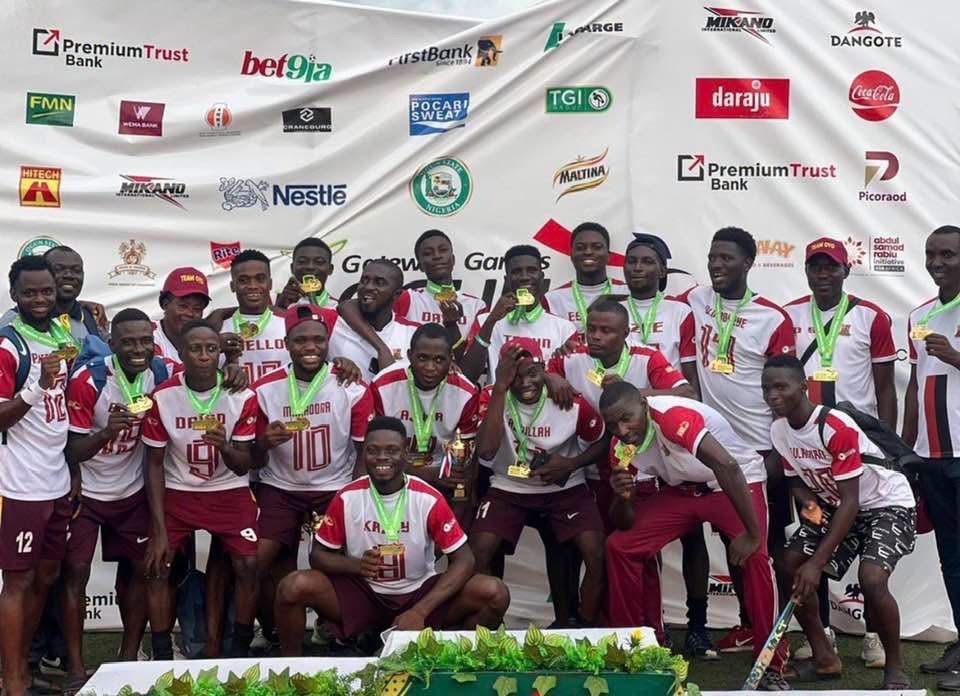
As Oyo State looks ahead to the forthcoming National Sports Festival in Enugu later this year, I believe it is important that we begin having this conversation now, not when the athletes are already on their way to Enugu. Success at the National Sports Festival does not begin at the festival. It begins months before the opening ceremony. For Oyo State, there is enough evidence from our recent performances to show that we have the talent and competitive capacity to be among Nigeria’s leading sporting states. What we need now is to translate that potential into a deliberate, sustained and well-coordinated preparation strategy. A COMPETITIVE TEAM, BUT THERE IS MORE TO ACHIEVE Team Oyo has remained consistently competitive at the National Sports Festival over the last three editions. At Edo 2020, Oyo finished 6th nationally, winning 103 medals—31 gold, 30 silver and 42 bronze. At Delta 2022, the state moved up to an impressive 4th position, recording 43 gold medals after the post-event review of the results. Then came the 2025 Gateway Games in Ogun State, where Team Oyo again finished 6th, but with an impressive 126 medals—38 gold, 38 silver and 50 bronze. There is an important lesson in these figures. The 2025 result should not simply be interpreted as a decline because Oyo finished 6th. In fact, the state recorded its highest overall medal haul of the three editions, increasing from 103 medals in Edo to 126 in Ogun. However, we must also acknowledge that Oyo slipped from the historic 4th-place finish achieved in Asaba. That should not discourage us. It should challenge us. The objective in Enugu should be more than simply matching the 126-medal performance. We should be looking to increase our gold-medal haul, improve our overall position and return Oyo State to the top four, and ultimately challenge for an even higher position on the national table. That will not happen by chance. THE HOCKEY STORY: WHAT DELIBERATE ATTENTION CAN PRODUCE One of the clearest examples of what is possible when attention, advocacy and encouragement meet talent is the story of the Oyo State Hockey Team. In April 2024, I came across conversations about the lack of adequate attention being given to hockey in Oyo State despite the impressive performances of some of our athletes at national and international competitions. My interest in this issue was also personal. As a young boy at Ibadan City Academy, I was exposed to different sporting disciplines through the school’s sporting equipment. It was there that I first encountered hockey sticks, discus, javelin, shot put and other equipment that introduced me to a world of sports beyond football. That early exposure shaped my belief that sports development must never be reduced to football alone. So when I saw the concerns around hockey, I decided not just to comment from afar but to engage. I visited the team during training to understand their reality firsthand. I saw young boys and girls preparing with determination despite the limitations around them, including the absence of a standard hockey pitch. I subsequently used my platforms to amplify their story, draw attention to their achievements and advocate for greater support. When the National Sports Festival in Ogun came around, I took that support a step further. I remember missing one of my final MSc presentations just to be with the lads in Ijebu-Ode during their semifinal campaign. Having previously won bronze and silver, my message to them was simple: “We’ve won bronze, we’ve won silver, and this time, we’re going for gold.” And they delivered. The Oluyole Bombers became champions, winning gold at the National Sports Festival, an important breakthrough and their first gold at the festival in recent years. For me, that gold medal represented much more than a sporting achievement. It was proof of what can happen when athletes are encouraged, supported, promoted and made to believe that their efforts matter. It also reinforced my conviction that sports development is beyond football. LET THE HOCKEY GOLD BE A TEMPLATE The success of the Oyo hockey team should not be treated as an isolated achievement. It should become a template. If a team that had struggled for adequate facilities and visibility could progress from competing for bronze and silver to becoming National Sports Festival champions, then there is an opportunity to replicate that progression across other sporting disciplines. We have athletes in athletics, boxing, basketball, volleyball, wrestling, cycling, kickboxing, table tennis and several other sports who deserve similar attention. Some of our athletes are already competing at national and international levels. Indeed, about six members of the Oyo hockey team have been part of the national hockey setup and are regarded among the best on the continent. These are not ordinary talents. They are assets to Oyo State. Our responsibility is to create the conditions that allow them to thrive. THE RACE TO ENUGU MUST BEGIN NOW As stakeholders prepare for Enugu, we must avoid the familiar culture of waiting until a few weeks to the festival before putting the necessary structures in place. We need to begin with early identification and preparation of medal prospects. There is a growing need for structured training programes for participating teams. Adequate provisions for sporting equipment and kits. Proper nutrition and welfare packages for athletes should be made top priority. We need timely incentives for athletes and coaches. We need quality technical and medical support. We need early camping where necessary. And we need transparent coordination between the government, sports administrators, coaches, athletes, private-sector partners and other stakeholders. Our athletes should arrive in Enugu focused entirely on competition—not worrying about accommodation, feeding, equipment, transportation, allowances or other basic welfare concerns that should have been addressed long before the festival. SPORTS MEDIA ALSO HAS A ROLE There is another area where we can do better: visibility. Despite being a state-owned team, many of our athletes and sporting teams remain largely invisible outside their immediate circles. This is where sports media, content creators and supporters can contribute.

THE RACE TO NATIONAL SPORTS FESTIVAL ENUGU 2026 HAS BEGUN: AN OPEN CALL FOR EARLY PREPARATION OF TEAM OYO Read More »